Ida Jaxon
The Passage (Justin Cronin Edition)Ida Jaxon, known to later generations as Auntie, is both a survivor of the children’s evacuation and a keeper of the First Colony’s earliest memories. Her recollections join a frightened child’s separation from her family to the founding generation’s arrival behind the walls, giving the Colony’s history a personal voice that its institutions cannot replace.
Identity and Background
Ida’s account appears in her journal, “The Book of Auntie,” presented at the Third Global Conference on the North American Quarantine Period in 1003 A.V. She writes as an old woman looking back across a life that began in the world before the Colony. Her testimony preserves not only how the children arrived, but ordinary details of a vanished past: Christmas gloves and scarves, walking with her father for water ice, and watching stars appear from a summer window.
As a child, Ida was no more than eight when her mother packed her a small suitcase and sent her away. She remembers the crowd pressing against fences, soldiers and dogs trying to keep people calm, and shots fired into the air. The separation registered as permanent even before she understood the emergency: she knew that her mother was sending her away forever.
Evacuation and Arrival
Ida recalls the jumps having taken New York, Pittsburgh, and Washington, D.C.; Philadelphia seemed an island, while reports about what had happened elsewhere remained uncertain. Her mother tried to explain that the infected were sick people, not simply enemies in a war. The explanation frightened Ida in a new way: because she herself had been ill, she feared she might wake and kill her parents and cousins. Her mother reassured her that her illness was different, but the child could not make sense of soldiers and war if the danger was only something like a sniffle.
On the train, Ida did not know that her cousin Terrence was traveling in another car. By the time they reached California, only three cars remained, two mostly empty. At the desert arrival point, soldiers met the children beside buses as helicopters stirred dust overhead. Cold water was among the first comforts; through the glare and dust, Ida recognized Terrence, and the cousins embraced, laughing and crying. Their reunion turned an impersonal evacuation into a family connection she could carry forward.
Terrence had been placed in the engine car by his father, Carleton Jaxon, a shipyard welder who had helped build the train. Carleton had told him to stay near the driver and obey instructions. Three years older than Ida, Terrence promised to look after her, and, in her telling, kept that promise until he died. He became the first Jaxon in the Household, beginning a family presence in that institution that continued through later generations.
First Night and the Founding Generation
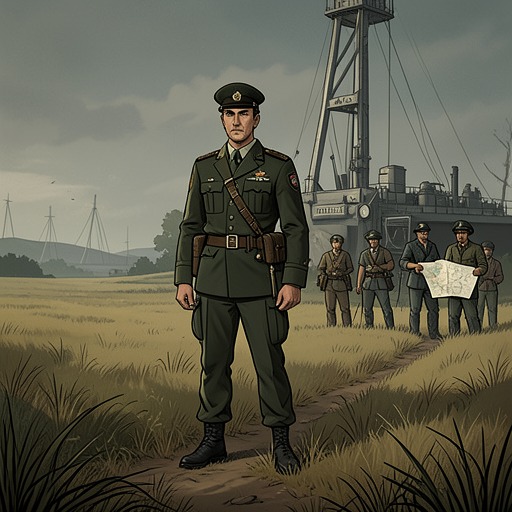
After a bus journey, Ida and Terrence reached the settlement: walls, tall light poles, soldiers, and FEMA trucks carrying food, weapons, clothes, and animals. The children were registered, given clean clothes, and taken to the Sanctuary, where Ida found a cot beside Terrence. When she asked what the place was, he told her it was where they would live, protected by lights and walls until the war ended, and compared it to Noah’s ark. Ida did not know whether she would ever see her parents again; Terrence could not promise that, but repeated that he would look after her.
The first family bonds of the new community formed in that room. A crying girl named Lucy Fisher accepted Terrence’s offer to look after her and asked him to include her brother, Rex. Lucy became Ida’s closest friend and later married Terrence; Ida also remembers the Fisher and Jaxon families as intertwined from then on. What began as a child’s practical promise thus became part of the Colony’s durable kinship history.
The expected Army return never happened. The buses and trucks left, the gates were sealed at dusk, and the lights came on so brightly that they blotted out the stars. Ida and Terrence stood outside shivering as the settlement’s first night became a lasting divide between the world they had left and the one they would inhabit. She says that in all the years afterward she never saw those stars again.
Memory, Loss, and Auntie
Ida’s later identity is inseparable from the act of remembering. She believes that without her writing, the first arrivals and their world would be lost. The First Ones are dead, forgotten, or have been taken up; among the losses she names are Terrence, taken up at twenty-seven, and Lucy, who died in childbirth. She also recalls Mazie Chou, though she can no longer remember whether Mazie died of appendicitis or cancer. The uncertainty itself marks the distance that time has opened between a witness and the details she once knew.
People call Ida Auntie because she could not have children of her own. Rather than describing herself as alone, she says she carries so many people inside her that she is never entirely alone, and expects to take them with her when she dies. Her recollection gives private grief a public function: the journal holds the dead in memory and records the beginnings of a community whose founding witnesses have nearly vanished. Ida is not only a survivor of the evacuation but its living archive, preserving a world through names, promises, and the image of stars disappearing behind the Colony’s lights.